
Do You Want to Do Development Without Developers?
- pmontwill
- May 16
- 5 min read
Updated: May 18
Introducing the Frankenstein AI Model...
For the past year, most discussions around AI coding have focused on “AI-assisted development.”
Tools like ChatGPT, Claude, Cursor, Copilot and others have dramatically increased developer productivity.
But during our work building AIVA (our "Analytics and Insights Virtual Assistant"), we discovered something that appears to go far beyond AI assistance.
We discovered an entirely new methodology for software development itself.
A methodology where:
Requirements emerge through conversation
Systems evolve themselves
Documentation writes itself
Features are built in minutes
The “developer” increasingly becomes an orchestrator rather than a coder
We’ve named this methodology:
The Frankenstein AI Model
And yes — the name is deliberate.
Why “Frankenstein”?
Because you are no longer building software directly.
You are creating something that increasingly builds itself.
Like Frankenstein’s creation:
You assemble the body (the core architecture)
You provide the energy (the prompts)
And then the system begins evolving beyond your original intentions
Once the process starts, the AI begins to:
Suggest improvements you didn’t think of
Expand functionality autonomously
Solve problems creatively
Generate senior-level implementations rapidly
Improve workflows beyond the original specification
This fundamentally changes the role of development.
The developer becomes:
Less builder
More creator
More parent than engineer
That is why we call it:
The Frankenstein AI Model
What We Tested This On
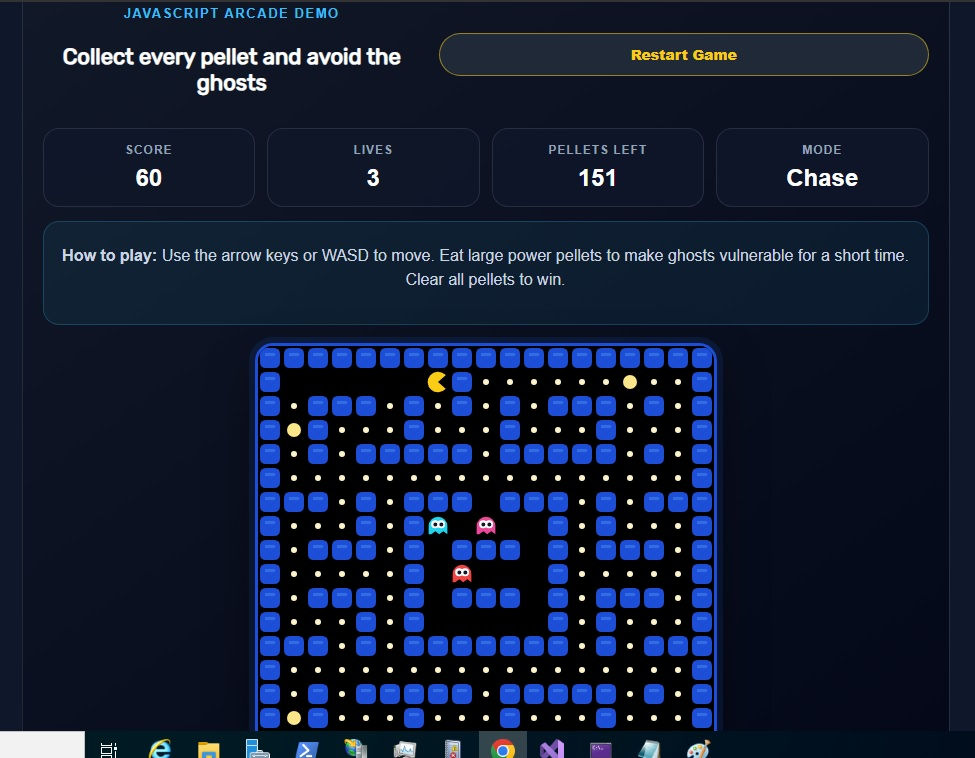
Before applying this methodology to enterprise software, we first tested it on game development.
The results were extraordinary.
Without writing a single line of code ourselves, the AI developed fully working games within minutes through conversational interaction alone.
One of the most surprising examples was building the game of Chess where we could play the computer in a game.
Using only iterative prompting and conversational refinement:
The AI developed a complete playable chess game
The entire process took approximately 10 minutes
Only 3 conversational iterations were required
We did not manually write a single line of code
The game compiled and ran successfully
The AI opponent beat me in the very first game
This was the moment we realised something fundamentally different was happening.
This was not traditional “AI coding assistance.”
The system was effectively:
designing
building
refining
and completing software autonomously through conversation
We then applied the exact same methodology to real-world business use cases.
We were able to produce new screens in an average of 30 minutes, with an average of three iterations, little or no manual code changes, and practically no compile errors.
This was particularly significant because the generated code was not prototype-quality.
In many cases, the output was comparable to senior developer-level implementation quality.
The key discovery was that once the correct AI-readable architecture existed, the AI could rapidly extend and evolve the system with remarkably little human intervention.
A New Category of Development
This sits within the emerging world of what many people are calling:
“Vibe Development”
But what we found is that vibe development can become a real, structured, repeatable methodology - not just experimental prompting.
The terms below are new terminology that we have developed internally to describe this new approach to software creation.
Because the old software development vocabulary no longer fully describes what is happening.
The New Terminology
1. Instant Expert Expansion
You provide a high-level idea.
The AI expands it into a complete expert-level design.
Instead of spending weeks writing specifications, you begin with conversational intent.
2. AI-Readable Architecture (The Critical Stage)
This is the single most important discovery we made.
And this stage determines whether “zero development” is even possible.
The AI must be able to understand your system naturally.
That means:
Clear naming conventions
Logical data structures
Minimal ambiguity
Clean separation of concerns
Simple, understandable foundations
We discovered that if the architecture is AI-readable, the AI can evolve the system extremely rapidly.
If the architecture is messy, unclear, over-engineered, or inconsistent - performance collapses.
This is why Step 2 is critical.
It is the dividing line between:
AI helping development
vs
AI effectively performing development
This is the biggest lesson from our testing.
3. Conversational Design Evolution
Instead of fixed specifications, the design evolves through conversation.
You ask questions like:
“What functionality are we missing?”
“How could this workflow improve?”
“What would a senior eCommerce manager expect to see here?”
The AI then expands the design dynamically.
And importantly:
the AI frequently suggests things you did not originally intend to build.
This is where development starts becoming evolutionary rather than prescriptive.
4. Conversational Build Evolution
The AI generates the implementation rapidly.
You test.
You respond.
The AI improves.
Then suggests further improvements.
The process becomes:
conversational
iterative
real-time
feedback-driven
Traditional development cycles collapse into minutes.
5. Instant Documentation Generation
Documentation becomes nearly instant.
Once functionality is complete, the AI can generate:
Technical docs
Support articles
User guides
Functional explanations
In our testing, documentation that previously required hours or days was generated in minutes.

The Real Shift: From Builders to Orchestrators
This is the deeper implication.
The role of software developers changes fundamentally.
Traditional development looked like this:
Design
Specification
Coding
Testing
Documentation
The Frankenstein Model becomes:
Create a strong AI-readable architecture
Frame the domain correctly
Guide the conversation
Iterate rapidly
Curate the evolution
The developer becomes:
An orchestrator of intelligence
rather than a manual implementer.
Why This Improves With Every AI Model Release
Another important observation:
This methodology improves automatically every time AI models improve.
Traditional software tooling improves incrementally.
But this model scales with AI capability itself.
As each new generation arrives:
reasoning improves
context handling improves
code quality improves
domain understanding improves
architecture comprehension improves
Which means the methodology itself becomes more powerful over time.
And we are still comparing this in human terms:
“developer productivity”
“developer replacement”
“senior engineer quality”
But AI may not stop at human equivalence.
It may develop entirely new limits and capabilities of its own over the coming years.
That is the truly important long-term implication.
The Most Important Question
Can development eventually happen without developers?
Right now, our conclusion is:
Not completely.
But we are clearly moving toward a world where:
fewer developers are needed
architecture becomes more important than coding
conversational orchestration becomes a core engineering skill
non-technical creators may increasingly build sophisticated systems
And based on our testing:
Step 2 — AI-Readable Architecture — is the key that determines whether this future becomes possible.
Final Thought
The Frankenstein AI Model represents something bigger than faster coding.
It represents a shift from:
Software construction
to
Software evolution
You no longer build every piece manually.
You create the conditions for intelligent systems to expand themselves.
And if this methodology continues improving alongside AI itself, then the speed of future innovation may no longer be limited by development capacity - but only by imagination.

Comments